JaCoP is a constraint solver for constraint satisfaction problems. It is written in Java and it is provided as a Java library. JaCoP has an interface to the MiniZinc and AMPL modeling languages. Its main focus is on ease of use, modeling power, as well as efficiency. It has a large collection of global constraints implemented to facilitate problem modeling. JaCoP is actively developed since year 2001. Krzysztof Kuchcinski and Radoslaw Szymanek are the core developers of this Java library. There are number of people who have contributed to JaCoP development in addition to core developers. JaCoP development has been influenced by more than 20 research articles from Constraint Programming community. It has been used as a tool in more than 30 research articles. There are many different examples provided so it is easier to learn how to use JaCoP. The JaCoP project contains a wrapper for the Scala programming language, and a wrapper for Clojure is maintained as a separate project CloCoP.
Model compression
Model compression is a machine learning technique for reducing the size of trained models. Large models can achieve high accuracy, but often at the cost of significant resource requirements. Compression techniques aim to compress models without significant performance reduction. Smaller models require less storage space, and consume less memory and compute during inference. Compressed models enable deployment on resource-constrained devices such as smartphones, embedded systems, edge computing devices, and consumer electronics computers. Efficient inference is also valuable for large corporations that serve large model inference over an API, allowing them to reduce computational costs and improve response times for users. Model compression is not to be confused with knowledge distillation, in which a smaller "student" model is trained to imitate the input-output behavior of a larger "teacher" model (as opposed to using the "teacher"'s trained parameters or the "teacher"'s training targets). == Techniques == Several techniques are employed for model compression. === Pruning === Pruning sparsifies a large model by setting some parameters to exactly zero. This effectively reduces the number of parameters. This allows the use of sparse matrix operations, which are faster than dense matrix operations. Pruning criteria can be based on magnitudes of parameters, the statistical pattern of neural activations, Hessian values, etc. === Quantization === Quantization reduces the numerical precision of weights and activations. For example, instead of storing weights as 32-bit floating-point numbers, they can be represented using 8-bit integers. Low-precision parameters take up less space, and takes less compute to perform arithmetic with. It is also possible to quantize some parameters more aggressively than others, so for example, a less important parameter can have 8-bit precision while another, more important parameter, can have 16-bit precision. Inference with such models requires mixed-precision arithmetic. Quantized models can also be used during training (rather than after training). PyTorch implements automatic mixed-precision (AMP), which performs autocasting, gradient scaling, and loss scaling. === Low-rank factorization === Weight matrices can be approximated by low-rank matrices. Let W {\displaystyle W} be a weight matrix of shape m × n {\displaystyle m\times n} . A low-rank approximation is W ≈ U V T {\displaystyle W\approx UV^{T}} , where U {\displaystyle U} and V {\displaystyle V} are matrices of shapes m × k , n × k {\displaystyle m\times k,n\times k} . When k {\displaystyle k} is small, this both reduces the number of parameters needed to represent W {\displaystyle W} approximately, and accelerates matrix multiplication by W {\displaystyle W} . Low-rank approximations can be found by singular value decomposition (SVD). The choice of rank for each weight matrix is a hyperparameter, and jointly optimized as a mixed discrete-continuous optimization problem. The rank of weight matrices may also be pruned after training, taking into account the effect of activation functions like ReLU on the implicit rank of the weight matrices. == Training == Model compression may be decoupled from training, that is, a model is first trained without regard for how it might be compressed, then it is compressed. However, it may also be combined with training. The "train big, then compress" method trains a large model for a small number of training steps (less than it would be if it were trained to convergence), then heavily compress the model. It is found that at the same compute budget, this method results in a better model than lightly compressed, small models. In Deep Compression, the compression has three steps. First loop (pruning): prune all weights lower than a threshold, then finetune the network, then prune again, etc. Second loop (quantization): cluster weights, then enforce weight sharing among all weights in each cluster, then finetune the network, then cluster again, etc. Third step: Use Huffman coding to losslessly compress the model. The SqueezeNet paper reported that Deep Compression achieved a compression ratio of 35 on AlexNet, and a ratio of ~10 on SqueezeNets.
GNU Binutils
The GNU Binary Utilities, or binutils, is a collection of programming tools maintained by the GNU Project for working with executable code including assembly, linking and many other development operations. The tools are originally from Cygnus Solutions. The tools are typically used along with other GNU tools such as GNU Compiler Collection, and the GNU Debugger. == Tools == The tools include: == elfutils == Ulrich Drepper wrote elfutils, to partially replace GNU Binutils, purely for Linux and with support only for ELF and DWARF. It distributes three libraries with it for programmatic access.
Cobocards
CoboCards is a web application for creation, study and sharing of flashcards. They also provide mobile application for Android and iOS mobile devices, to help study of flashcards on the move. Based on the freemium model, CoboCards provides users a free account with two card sets compared to paid subscription with premium features such as unlimited card sets, Leitner system based trainer and collaborative learning. == History == CoboCards is a project of Jamil Soufan and Tamim Swaid. Tamim Swaid has developed the concept and interface of a collaboratively usable e-learning platform in his diploma thesis at the University of Applied Sciences in February 2007. In January 2010 they founded the CoboCards GmbH (limited company) together with Ali Yildirim. CoboCards is supported by its strategic partners Prof. Schroeder (RWTH Aachen University), Prof. Oliver Wrede (University for Applied Sciences Aachen) and Prof. Klaus Gasteier (University of Arts Berlin). With the idea of creating and studying flashcards online and offering an active control of learning progress they won the start2grow business idea competition in September 2009 (€25.000 ). Additionally CoboCards was funded by German Authorities with approximately €100.000 .
Apache Parquet
Apache Parquet is a free and open-source column-oriented data storage format in the Apache Hadoop ecosystem inspired by Google Dremel interactive ad-hoc query system for analysis of read-only nested data. It is similar to RCFile and ORC, the other columnar-storage file formats in Hadoop, and is compatible with most of the data processing frameworks around Hadoop. It provides data compression and encoding schemes with enhanced performance to handle complex data in bulk. == History == The open-source project to build Apache Parquet began as a joint effort between Twitter and Cloudera using the record shredding and assembly algorithm as described in Google's Dremel. Parquet was designed as an improvement on the Trevni columnar storage format created by Doug Cutting, the creator of Hadoop. The name 'parquet' (lit. 'small compartment') refers to a style of decorative flooring and was chosen to "evoke the bottom layer of a database with an interesting layout". The first version, Apache Parquet 1.0, was released in July 2013. Since April 27, 2015, Apache Parquet has been a top-level Apache Software Foundation (ASF)-sponsored project. == Features == Apache Parquet is implemented using the record-shredding and assembly algorithm, which accommodates the complex data structures that can be used to store data. The values in each column are stored in contiguous memory locations, providing the following benefits: Column-wise compression is efficient in storage space Encoding and compression techniques specific to the type of data in each column can be used Queries that fetch specific column values need not read the entire row, thus improving performance Apache Parquet is implemented using the Apache Thrift framework, which increases its flexibility; it can work with a number of programming languages like C++, Java, Python, PHP, etc. As of August 2015, Parquet supports the big-data-processing frameworks including Apache Hive, Apache Drill, Apache Impala, Apache Crunch, Apache Pig, Cascading, Presto and Apache Spark. It is one of the external data formats used by the pandas Python data manipulation and analysis library. == Compression and encoding == In Parquet, compression is performed column by column, which enables different encoding schemes to be used for text and integer data. This strategy also keeps the door open for newer and better encoding schemes to be implemented as they are invented. Parquet supports various compression formats: snappy, gzip, LZO, brotli, zstd, and LZ4. === Dictionary encoding === Parquet has an automatic dictionary encoding enabled dynamically for data with a small number of unique values (i.e. below 105) that enables significant compression and boosts processing speed. === Bit packing === Storage of integers is usually done with dedicated 32 or 64 bits per integer. For small integers, packing multiple integers into the same space makes storage more efficient. === Run-length encoding (RLE) === To optimize storage of multiple occurrences of the same value, run-length encoding is used, which is where a single value is stored once along with the number of occurrences. Parquet implements a hybrid of bit packing and RLE, in which the encoding switches based on which produces the best compression results. This strategy works well for certain types of integer data and combines well with dictionary encoding. == Cloud Storage and Data Lakes == Parquet is widely used as the underlying file format in modern cloud-based data lake architectures. Cloud storage systems such as Amazon S3, Azure Data Lake Storage, and Google Cloud Storage commonly store data in Parquet format due to its efficient columnar representation and retrieval capabilities. Data lakehouse frameworks—including Apache Iceberg, Delta Lake, and Apache Hudi —build an additional metadata layer on top of Parquet files to support features such as schema evolution, time-travel queries, and ACID-compliant transactions. In these architectures, Parquet files serve as the immutable storage layer while the table formats manage data versioning and transactional integrity. == Comparison == Apache Parquet is comparable to RCFile and Optimized Row Columnar (ORC) file formats — all three fall under the category of columnar data storage within the Hadoop ecosystem. They all have better compression and encoding with improved read performance at the cost of slower writes. In addition to these features, Apache Parquet supports limited schema evolution, i.e., the schema can be modified according to the changes in the data. It also provides the ability to add new columns and merge schemas that do not conflict. Apache Arrow is designed as an in-memory complement to on-disk columnar formats like Parquet and ORC. The Arrow and Parquet projects include libraries that allow for reading and writing between the two formats. == Implementations == Known implementations of Parquet include:
Automaton
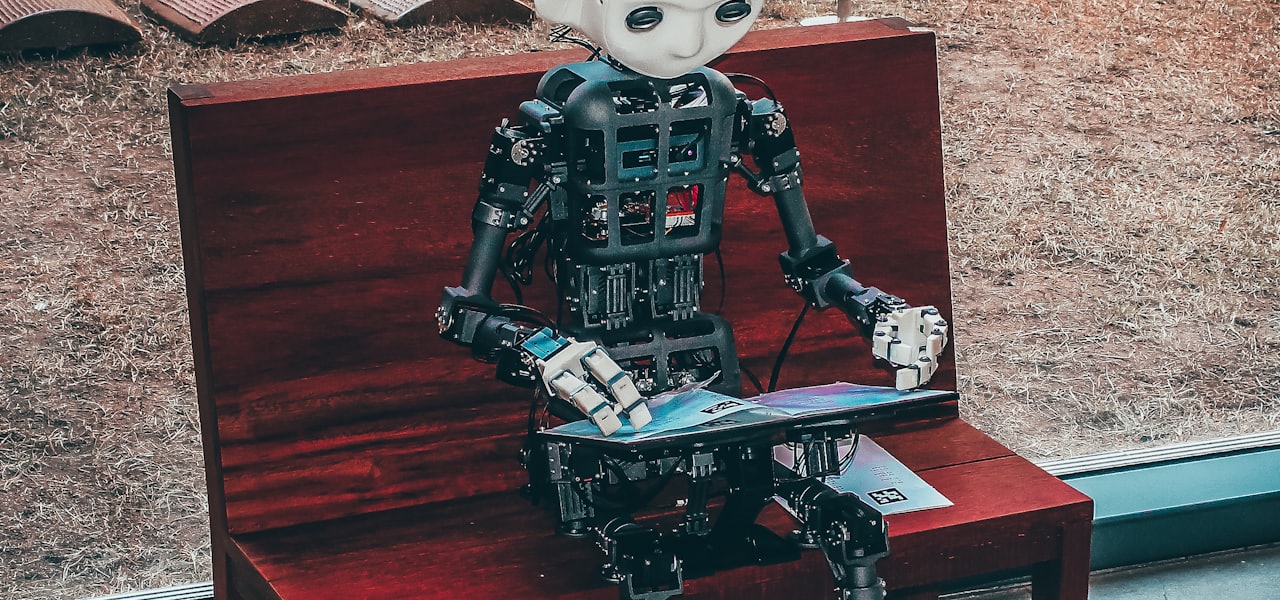
An automaton ( ; pl.: automata or automatons) is a relatively self-operating machine or control mechanism designed to automatically follow a sequence of operations or respond to predetermined instructions. Some automata, such as bellstrikers in mechanical clocks, are designed to give the illusion to the casual observer that they are operating under their own power or will, like a mechanical robot. The term has long been commonly associated with automated puppets that resemble moving humans or animals, built to impress and/or to entertain people. Animatronics are a modern type of automata with electronics, often used for the portrayal of characters or creatures in films and in theme park attractions. == Etymology == The word automaton is the latinization of the Ancient Greek automaton (αὐτόματον), which means "acting of one's own will". It was first used by Homer to describe an automatic door opening, or automatic movement of wheeled tripods. It is more often used to describe non-electronic moving machines, especially those that have been made to resemble human or animal actions, such as the jacks on old public striking clocks, or the cuckoo and any other animated figures on a cuckoo clock. == History == === Ancient === There are many examples of automata in Greek mythology: Hephaestus created automata for his workshop; Talos was an artificial man of bronze; King Alkinous of the Phaiakians employed gold and silver watchdogs. According to Aristotle, Daedalus used quicksilver to make his wooden statue of Aphrodite move. In other Greek legends he used quicksilver to install voice in his moving statues. The automata in the Hellenistic world were intended as tools, toys, religious spectacles, or prototypes for demonstrating basic scientific principles. Numerous water-powered automata were built by Ktesibios, a Greek inventor and the first head of the Great Library of Alexandria; for example, he "used water to sound a whistle and make a model owl move. He had invented the world's first 'cuckoo clock'". This tradition continued in Alexandria with inventors such as the Greek mathematician Hero of Alexandria (sometimes known as Heron), whose writings on hydraulics, pneumatics, and mechanics described siphons, a fire engine, a water organ, the aeolipile, and a programmable cart. Philo of Byzantium was famous for his inventions. Complex mechanical devices are known to have existed in Hellenistic Greece, though the only surviving example is the Antikythera mechanism, the earliest known analog computer. The clockwork is thought to have come originally from Rhodes, where there was apparently a tradition of mechanical engineering; the island was renowned for its automata; to quote Pindar's seventh Olympic Ode: The animated figures stand Adorning every public street And seem to breathe in stone, or move their marble feet. However, the information gleaned from recent scans of the fragments indicate that it may have come from the colonies of Corinth in Sicily and implies a connection with Archimedes. According to Jewish legend, King Solomon used his wisdom to design a throne with mechanical animals which hailed him as king when he ascended it; upon sitting down an eagle would place a crown upon his head, and a dove would bring him a Torah scroll. It is also said that when King Solomon stepped upon the throne, a mechanism was set in motion. As soon as he stepped upon the first step, a golden ox and a golden lion each stretched out one foot to support him and help him rise to the next step. On each side, the animals helped the King up until he was comfortably seated upon the throne. In ancient China, a curious account of automata is found in the Lie Zi text, believed to have originated around 400 BCE and compiled around the fourth century CE. Within it there is a description of a much earlier encounter between King Mu of Zhou (1023–957 BCE) and a mechanical engineer known as Yan Shi, an 'artificer'. The latter proudly presented the king with a very realistic and detailed life-size, human-shaped figure of his mechanical handiwork: The king stared at the figure in astonishment. It walked with rapid strides, moving its head up and down, so that anyone would have taken it for a live human being. The artificer touched its chin, and it began singing, perfectly in tune. He touched its hand, and it began posturing, keeping perfect time...As the performance was drawing to an end, the robot winked its eye and made advances to the ladies in attendance, whereupon the king became incensed and would have had Yen Shih [Yan Shi] executed on the spot had not the latter, in mortal fear, instantly taken the robot to pieces to let him see what it really was. And, indeed, it turned out to be only a construction of leather, wood, glue and lacquer, variously coloured white, black, red and blue. Examining it closely, the king found all the internal organs complete—liver, gall, heart, lungs, spleen, kidneys, stomach and intestines; and over these again, muscles, bones and limbs with their joints, skin, teeth and hair, all of them artificial...The king tried the effect of taking away the heart, and found that the mouth could no longer speak; he took away the liver and the eyes could no longer see; he took away the kidneys and the legs lost their power of locomotion. The king was delighted. Other notable examples of automata include Archytas' dove, mentioned by Aulus Gellius. Similar Chinese accounts of flying automata are written of the 5th century BC Mohist philosopher Mozi and his contemporary Lu Ban, who made artificial wooden birds (ma yuan) that could successfully fly according to the Han Fei Zi and other texts. === Medieval === The manufacturing tradition of automata continued in the Greek world well into the Middle Ages. On his visit to Constantinople in 949 ambassador Liutprand of Cremona described automata in the emperor Theophilos' palace, including "lions, made either of bronze or wood covered with gold, which struck the ground with their tails and roared with open mouth and quivering tongue," "a tree of gilded bronze, its branches filled with birds, likewise made of bronze gilded over, and these emitted cries appropriate to their species" and "the emperor's throne" itself, which "was made in such a cunning manner that at one moment it was down on the ground, while at another it rose higher and was to be seen up in the air." Similar automata in the throne room (singing birds, roaring and moving lions) were described by Luitprand's contemporary the Byzantine emperor Constantine Porphyrogenitus, in his book De Ceremoniis (Perì tês Basileíou Tákseōs). In the mid-8th century, the first wind powered automata were built: "statues that turned with the wind over the domes of the four gates and the palace complex of the Round City of Baghdad". The "public spectacle of wind-powered statues had its private counterpart in the 'Abbasid palaces where automata of various types were predominantly displayed." Also in the 8th century, the Muslim alchemist, Jābir ibn Hayyān (Geber), included recipes for constructing artificial snakes, scorpions, and humans that would be subject to their creator's control in his coded Book of Stones. In 827, Abbasid caliph al-Ma'mun had a silver and golden tree in his palace in Baghdad, which had the features of an automatic machine. There were metal birds that sang automatically on the swinging branches of this tree built by Muslim inventors and engineers. The Abbasid caliph al-Muqtadir also had a silver and golden tree in his palace in Baghdad in 917, with birds on it flapping their wings and singing. In the 9th century, the Banū Mūsā brothers invented a programmable automatic flute player and which they described in their Book of Ingenious Devices. Al-Jazari described complex programmable humanoid automata amongst other machines he designed and constructed in the Book of Knowledge of Ingenious Mechanical Devices in 1206. His automaton was a boat with four automatic musicians that floated on a lake to entertain guests at royal drinking parties. His mechanism had a programmable drum machine with pegs (cams) that bump into little levers that operate the percussion. The drummer could be made to play different rhythms and drum patterns if the pegs were moved around. Al-Jazari constructed a hand washing automaton first employing the flush mechanism now used in modern toilets. It features a female automaton standing by a basin filled with water. When the user pulls the lever, the water drains and the automaton refills the basin. His "peacock fountain" was another more sophisticated hand washing device featuring humanoid automata as servants who offer soap and towels. Mark E. Rosheim describes it as follows: "Pulling a plug on the peacock's tail releases water out of the beak; as the dirty water from the basin fills the hollow base a float rises and actuates a linkage which makes a servant figure appear from behind a door under the peacock and offer soap.
Cloud-native computing
Cloud native computing is an approach in software development that utilizes cloud computing to "build and run scalable applications in modern, dynamic environments such as public, private, and hybrid clouds". These technologies, such as containers, microservices, serverless functions, cloud native processors and immutable infrastructure, deployed via declarative code are common elements of this architectural style. Cloud native technologies focus on minimizing users' operational burden. Cloud native techniques "enable loosely coupled systems that are resilient, manageable, and observable. Combined with robust automation, they allow engineers to make high-impact changes frequently and predictably with minimal toil." This independence contributes to the overall resilience of the system, as issues in one area do not necessarily cripple the entire application. Additionally, such systems are easier to manage, and monitor, given their modular nature, which simplifies tracking performance and identifying issues. Frequently, cloud-native applications are built as a set of microservices that run in Open Container Initiative compliant containers, such as Containerd, and may be orchestrated in Kubernetes and managed and deployed using DevOps and Git CI workflows (although there is a large amount of competing open source that supports cloud-native development). The advantage of using containers is the ability to package all software needed to execute into one executable package. The container runs in a virtualized environment, which isolates the contained application from its environment.